
Colivers Club Ep 28: Can We Build 3 Million Nomad Communities? With Pelé Philipp Alexander Weber
“What if every village in the world hosted its own mini “Nomad Fest”? In this episode, César sits down with Pelé Philipp Alexander Weber to explore a bold vision: creating millions of spaces where people come together to share ideas, grow, and truly connect.
From his roots in Switzerland running transformative summer camps to co-owning and expanding Nomad Fest, Pelé shares how gatherings, unconferences, and co-living experiences can empower individuals far beyond traditional education. He reflects on the magic of in-person connection in a hyper-digital world, the rise of solopreneurs, and why community might be the antidote to loneliness and dopamine-driven lifestyles.
They dive into:
• The power of unconferences and peer-to-peer learning
• Why digital nomads thrive on real-life connection
• How co-living can evolve through crowdfunding and shared ownership
• The vision behind projects like Nomad Fest, Nomad Summit, and Spark Connect
• Why the future belongs to communities, not just companies
This episode is a reminder that the most meaningful transformations often happen when strangers come together—and leave as something more.
Would you join (or even create) your own Nomad Fest in your city? 🚀🌱
Read the Interview
César: Hello everyone to another episode of Colivers Club today. Here I am with Pelé Philipp Alexander Weber. He wants to build 3 million Nomadfests. How are you Pelé?
Pelé: I’m very good. Thank you. This. Yeah.
César: I think the first question to ask you is what is Nomad Fest first.
Pelé: For a Nomad Fest first is a gathering of nomads. And that’s already the problem because at the moment we have only 30 million nomads not around the world. So in Switzerland, we do the, Swiss nomad fast as well. That’s now the first we did in last, December. This is normal, fast. And when I tell to people in Switzerland, I tell them, hey, do you come to the normal fast? And they’re like, nah, I’m not a nomad. So I want to create 3 million nomad fasts around the world because I believe we need to have a format where people come together and learn from each other, exchange ideas to peer to peer learning, and every little village should have its own economic class. That’s where that 3 million comes from. We have 3 billion, according to Google, 2 million villages around the world. And so yeah, every little village should have format three, four days a year where we come together and, share problems and find solutions. That would be we would desert for that human beings now to have something where we empower ourselves.
César: Absolutely. And to me, Nomad Fest, which is one of the Nomad Fest, it’s something that is very special to me because it was my first digital Nomad event. I was there last year and I actually, after seven years working for the same company, I quit my job during Nomad Fest. So I feel like the that’s the maximum thing you can do in, and must risk quitting your job to become a freelancer and be a true digital nomad. We’ve got for you. What does it mean to be a digital nomad?
Pelé: Well, that’s the funny thing. Yeah, that’s what we say in, on Sky is where the magic happens. I have been there the first time, only 222, but I had the same feeling. I was like, wow, that is so different. What, what happens here? And it’s serendipity. I always come here properly, but it is this moment where everything comes together and this energy,
César: Explodes and the whole city comes to life. It’s ridiculous.
Pelé: It’s incredible in yourself as well. And then something happens, and you have so good meetings of people that show you, hey, I need to go out of my comfort zone. That’s what I felt. The first time I came to bounce was,
César: Yeah. I actually felt so supported by this group of random people. Strangers, when I was telling them, oh, I’m quitting my job. And they were all congratulating me, and they were like, celebrating. And to me, that’s amazing, because when I told my family and friends, which I love them very much, they were of course concerned. I just sure like you have a good salary, it’s quite flexible and they were concerned, but it’s a totally different mindset now. We I think our comfort zone as digital nomads is outside of the comfort zone.
Pelé: Exactly. And you know what? It’s very funny now like for me that was a new thing as well. Like as, I do summer camps normally. I started in summer camps 2007 and soon I realized, wow, I don’t only teach French, German, English to the kids, I empower them. The parents came to me and said, wow, it is amazing what they do. And my kid came back and it’s so.
César: And it’s the same kid. No, you didn’t in two weeks.
Pelé: Yeah.
César: He’s not a different kid that you mistook and place them with another family. No, no, no, they came entirely.
Pelé: And then I was always looking for something for adults to empower adults. And when I came to school, also the unconference that was for me, exactly the format that I’ve been looking all my life long. Very be. I’m not such a fan of the keynotes like out of ten keynotes. For me, maybe 3 or 4 are really relevant, but with the UN conferences, and I don’t think we need to explain it to, to our audience here. Most people would know we our own, but.
César: Maybe we should explain so they understand the magic.
Pelé: And yet let’s do it. So in, one school on Monday at 1:00, everybody has one minute that wants to pitch. And even that it’s also many people in the beginning are a bit like, I really do it in stage in front of 400 people, and it needs a little bit. But then you do it and you’re proud about yourself, and then you do your unconference. So people are pitching their idea. And afterwards, during the week, they have a half an hour slot that they can decide themselves what they want to do for this half an hour. They can do also have a monologue, but obviously I believe it’s much more interesting to have an exchange peer to peer for knowledge base. And so yeah, we had topics like one guy was I always playing that as an example of or chronic illnesses? I mean, fortunately not many people have that. But if you have it, it’s a horrible thing and it’s great if you can come together and discuss strategies. And there would be so much inside this wisdom if we come together and just exchange ideas or you see the neighbor and you were like, why is he such in such a bad mood? But then sometimes you make a small step towards him and you’re like talking. Yeah. Suddenly the neighbor wakes up and is like, wow, I share my problems now, but I think they have been for too long. We had to have this facade, especially in Western Europe. It was in the 40s, 5060s was very important to keep your facade. The pretense something. And the young generation now is definitely. Yeah, totally the changes I never had that my, my mother always was like, I don’t give a shit. But people tell, us that it doesn’t matter. It’s not important. It’s a bit ridiculous and not. And so, that’s really cool about the Gen Z now that they, they say, why should we do that? And yeah.
César: Absolutely. Embrace with those buttons.
Pelé: We go back to the unconference. So that’s the heartbeat of the pulse column. At first, and I believe it should be of every gathering of human beings. This as a heart piece. And back to the idea. No fest. It doesn’t have to be an office. But maybe the nomads were always the people that brought the new ideas. And now in history, a lot of development always happened when the Arab guy came to Spain and said, hey, look, I have this powder here. You know, that’s how, development happens. And now it seems again, the nomads have a super interesting influence on how things develop in this world.
César: And. Absolutely. And I think it’s very interesting that the digital nomad community is very analog about their personal lifestyle, but very detail about their work and all this, cognitive dissonance there, which is interesting to me because I feel like when I travel to co-living, even though everyone is working remotely, the sense of community is very tight. And that’s something that is very hard or even impossible to replicate digitally. Now, sometimes we are too focused on digital tools and social networks, but we forget that the magic happens when we are together.
Pelé: Yeah, we we are getting more conscious about that than the normal people. I tried to bring people to our colleagues in Switzerland. I go, I went to different cities and checked out co-working space, and it’s surprising how, not connected they are. Or another normal influencer. She wrote about how she went to Chicago. She did a home exchange, went to this beautiful, beautiful place, a super upmarket, apartment. And she said, men. And it was of a condominium, like many, many people together. But she said, how can I even enjoy this if I don’t meet people now? And so the nomads are the first ones that understand, like, wow, that’s what we need much more. And that’s what is our big sickness of our time that we get more and more and more lonely and, Instagram and Facebook, they promised us before to bring us together, but they did the opposite. We could hide more and more. We are just talking about more.
César: Polarized, more extreme.
Pelé: Exactly. Because you don’t talk to us. Very sad thing that happened that this crazy guy got voted because people don’t want to talk with each other, right? Yeah, he’s from this party or we don’t even talk with him anymore, which is very stupid and dangerous.
César: Yeah. Because I feel like the energy when you talk person to person, the openness and. Yeah. Is the messaging, message. No, it cannot convey everything. Right. There is not so much bandwidth as in a real person to person conversation or.
Pelé: Like it’s a totally different thing. And then, I mean, the haters and the things that happen on this, channel able to react like there isn’t. No, they wouldn’t do that in person. No they wouldn’t, but as well they don’t want to go to meet real people anymore. That was also a bit that the pandemic that made that happen, their country has now a lot of people that are like really isolated and don’t show up anymore. You know, in my whole town, some people that really got stuck and now they’re only with their gadgets and very, antisocial. And so, yeah, that’s actually it. The Facebook is more on any social app. Yeah. Okay. A social app It divided us more.
César: Absolutely. And this passion for events and bringing people together on the face made you involved with, Nomad Fest, right? In what.
Pelé: Ways? So I, after doing many years, my summer camps, I bought our first property in the Swiss Alps. The thing was that Switzerland was always much more expensive than other countries, which was, to our disadvantage, like Psychonauts or Ceremony, which everybody knows. Tourists that go there, they don’t give a shit about money. They have as much. It doesn’t matter for them where we are. Our place is very close to Verbier, but the real estate is very down. And we bought that place and I before I didn’t believe that I could afford, the lake place. And then I bought several places like this, quite low amount of money. Then the pandemic hit now and then we had before big numbers of Russians, of, Chinese, of Brazilians, and then we had much less, students. And I was like, what am I going to do? I realize now and me, I have always been a digital nomad in a certain sense that I have a song in Brazil, been living for 17 years between Switzerland and Brazil. Two months. Brazil, one of Switzerland, two months. Brazil going, coming. And I was always a backpacker first. We always hitchhiked through Europe, me and my friends, since we I was always a normal at heart. I never like to be more than 1 or 2 weeks in one place. I always had to move, it’s a bit my nature. And so I read this article about this guy that, from Dubai that they did in a neighbor valley in Switzerland, that thing that was called co-living, that it was around 2017 that I read about that in my newspaper. I was like really fascinated about that. But then it took a while until we said, wow, that could be something for us as well. And when we started our co-living, we were finding ways of bringing people to our colonies in Switzerland. Problem was a bit surprising. It’s still a bit expensive, although nowadays in the end mean you can stay in the Swiss Alps co-living for in summer for 1200Hz.
César: You were amazing for Switzerland. And compared to other co-living in Europe, right?
Pelé: Yeah, we are cheaper there. Definitely. Yeah, yeah. And so we, me and my business partner Stephan, we went to answer the first 10 to 22 and I was so overwhelmed. It was the best week of my life. I felt I learned one week more than, two years of university. I was so handsome, so intense. And I talk with Matthias, the founder and a satellite man is unique to really bring to the world. It was like, look, at the moment, it’s not my focus, but why don’t you do it? And then the year after we did our own Nomad first and we started to negotiate with Matthias, we were a bigger group of, ten people that are interested in buying the none of us. In the end, it was me that bought it because the group in the end was not. They said it’s too expensive for what we get. So I negotiated again with Matthias and, then bought it. But then suddenly the group suddenly said, oh, come on.
César: Let’s.
Pelé: Join again. And so in the end, now we are seven co-owners and do the Nomad fast now, the second time this year, but I’m not much involved in an operation.
César: Yeah. Nice. I’ve never thought about the possibility of buying an event that’s super interesting to me.
Pelé: Yeah. Oh and yeah we did since then also several older events. Now we did this as I said in two times in Switzerland we needed a nomad fast one in Bosnia as well. We did something small in Brazil for the normal cruise. We did something small. Italian made more a one day event with unconference. When we did the first Nomad Finance in Switzerland, that was actually really through Bon Scott, like we had 55 or 60 people coming. Most of them had been before to Bon Scott. In the beginning were a little bit disappointed, but soon we realized, wow, it doesn’t matter to size at all. We’re also a music festival. When you have only 50 people, you’re like, yeah, the boring.
César: Yeah, absolutely.
Pelé: The normal fast is an event that includes the whole life. No events. Can we do a football tournament? We do storytelling night. We do, conferences, speaker sessions. Everything is a.
César: Talent show as well. And show.
Pelé: The speak.
César: I participated last year in the talent show. Right? Yeah, yeah, I did a dance. Bachata, which I, I really enjoy dancing, so.
Pelé: Yeah, I mean, and that’s.
César: What that’s maybe.
Pelé: About. I believe that’s the other thing with what social media did to us that we are not active anymore. We’re just consuming consume. We consume. We’re not going to the street anymore, protesting against Donald Trump because we’re like, yeah, it’s shit. But I’m just scrolling up and down that it’s like a tranquilizer, like Romans. If they would have known that there is this, there’s this old saying now games and all this stuff is the opium for the people. That’s what we found. No. Nice new Instagram. It’s exactly the people are not getting angry anymore. They’re just destroying.
César: Yeah it’s a great tool if you use it. Right. But definitely.
Pelé: And definitely.
César: The thing I feel with society nowadays is that we are very dopaminergic. So everything is about dopamine, about getting quick gratification for everything you do and all the companies and everyone is trying to get your attention. And this breaks the brain. So at some point you only get satisfaction by infinite scrolling, because it’s like playing with, in the casino. No, with this kind of machines. So, yeah, I think, the way to diffuse that is to be more present. And I think you gain presence while being with others. Right. And well-being with other people that have attained that presence. And I feel like when I go to these events because, for example, now we are in the Nomad World Festival, hearing Albufeira in Portugal, there’s this sense of people that are quite conscious or are in the process of becoming conscious or present. No. And that to me is the way to, battle with dopamine and dopaminergic, culture. Let’s say. Wow, okay.
Pelé: That’s interesting. And one fault I didn’t finish before was somehow this nomad fest that there’s no new way of kettering’s and making the unconference and learning so well from each other, empowering adults that interfere very much. Now with the older technical development, with the AI, which also changes totally our life now. So for me, that was actually quite funny because, yeah, like 2 or 3 years ago, we couldn’t have imagined, becoming a solopreneur just because of I am the first, solopreneur billionaire, as Sam Altman said, now suddenly possible. So again, back to the nomads we have now this opportunity to do everything without any help. On the one hand, you don’t need to be in a company. More and more people, having seen all this opportunity of becoming solopreneurs, of doing the things ourselves, becoming free, that’s a big part. Free and independent. That’s what we always hear now, when we were in the event. Now the people say like, man, I don’t want to be anymore. Following other people, not needing to to work in a company and and following orders and stuff. It’s at the moment it’s confusing, know it’s so many things happening and even talking now, at the moment, it’s like, yeah, the dopamine are gone. Yeah, it’s a crazy, crazy time. And and then also if it happens politically this is scary as well. And crazy times okay. But we haven’t had it about yesterday. Now 1500 when Christopher Columbus discovered Earth and Corona, a renaissance happened at the same time and the Moors really were kicked out of the south of Spain, or at least of the bigger part of Spain. There are always these moments in.
César: Everything Happens one and one. Yeah, I’m just so sorry for the future. If history students, if they get in next time. Oh, let’s, question the 2020 decade or that’s years off. There’s going to be a lot of, I don’t know, things to tell about. Yeah, in hindsight.
Pelé: It’s really crazy. I mean, as well, I don’t know if you remember the last century we had like the 50s, everybody, if you talk about the 50s, everybody has a picture of how the 50s looked like, the hairstyle, the music, the 60s were different. You have your pictures. That was because of the the mainstream media. Now that everything there that was the only channel. And they created this picture of what, how this period looked like. And now if we look to the 10 or 0 years, you don’t have any picture of how it was anything or in your mind. Yeah. It’s so some multitude, it’s so many things happening, different people to news. But then the downside was really that like now we don’t have any more. And one interesting opinion I read this article in the Spiegel newspaper from Germany that the in the Soviet Union time they did propaganda, but changed it by 10 to 15%. If they didn’t have the courage to to say, 180 degrees. The other thing that as, as they do nowadays. Yeah. Fake news now Donald Trump just says, no, that’s not true. And you’re like, what. Wouldn’t have been possible 5060. Yeah. That’s so crazy.
César: Until you started with summer camps. What’s your story behind that?
Pelé: I grew up in Switzerland and Swiss German. And I asked my father when I was 16 or 17 years old, I asked him, hey, what would you do different again if you could restart? And he said, man, I would learn more languages and get better in languages. And I was always very good with mathematics, but not so good with languages in the memory. And then I went to a language course for the first time, and I loved it so much because it’s this tolerant atmosphere where people from different cultures come together and they are very open minded and very nice with each other. And I love it so much. And I was like, wow, I don’t like to learn languages. So I’m helping to go to.
César: The yeah for it now.
Pelé: Yeah, it’s so cool. It’s a community as well. It’s people from everywhere with different mindsets, different views, and you learn so much. So then I went to war in Switzerland to learn to study at the bilingual studies of French, of German. When I was studying economics, I worked a lot with kids and teenagers. I was a ski teacher for several winters. I was a company in ski camps for kids, and I really liked, working with people and with kids. And then I went as a group leader to England, and I liked it so much. I was like, man, let me do that myself. And I started the first I even I had actually, I failed my finishing exams. And then the same week actually, I had with my new project, my free learning, I had to go to like, company like to show that project, and they wanted to give me some funds to support me. Then in the end, definitely with 6,000 CHF, because they said, oh, that’s a great idea. What do you want to do? So I yeah, I never had a real job since I finished my studies, which I finished actually very late because I preferred partying and talking with people. Then coming to university, I always felt it was a bit boring at that time. I started my summer camps and it was soon a success. Once I realized that is my own thing. I really liked to work and often did 12 14 hours a day.
César: Which is a passion produced for you. Then it’s like a hobby, not like sometimes you forget it is really work.
Pelé: Exactly. I never felt like work, and as soon as I started to manage to hire people, I. Yeah, it’s.
César: In a fund that.
Pelé: I think are boring. And yeah, it was,
César: But you should fire all your team, right? Fired them. And then, you know, of course I’m kidding. Don’t fire. You are. You are saved, guys. Don’t. Worry.
Pelé: Yeah.
César: Okay. Okay. And then, how did that transition into college?
Pelé: When I came to school, I felt, wow, that’s the way out. Empower adults, bringing them together. And. But now, obviously, from my side, it was more a need that we had to bring people to our place to to have a certain occupancy. And then that’s why we started that college exam.
César: And then this, brings me to ask a question. What does co-living mean to you?
Pelé: So I always like to share. I always lived in, sharing flats. I like to hitchhike. I like to bit this alternative lifestyle. I like this volunteering projects. Before I started my summer camps, I also went to several volunteering projects. I was for 12 years around a member of the second biggest volunteering organization, Switzerland. As a volunteer myself, like we met once or twice a month and exchanged ideas and tried to bring this organization forward because I think it’s one of the best peace project, bringing people together as a volunteer work for 1 or 2 weeks, having these small conflicts, understanding each other, creating something together. I love the idea of volunteer volunteerism.
César: And for you, the co-living. What does it need to have to be really a co-living?
Pelé: So I think it should have this exchange. Know that not everybody is always on his own. And otherwise you don’t need to join a co-living. But that’s for me, always surprising how people are not having so much a need of sharing ideas. I remember when I arrived in my student home in Freeport, where I studied, and the first year I lived in a student home where there were like 50 apartments and there’s always four people in one apartment. And the first day I went to knock to every door and I was like, hey guys, how are you?
César: Let’s meet what we are. So like, what are you doing? What’s the.
Pelé: Reaction? Yeah. If 80% of the people are like, what’s wrong with you? It’s something we were like, well, it’s great. Cool. Yeah, right. Let’s have a coffee. But I was like, wait, this is a student home. You should, you should.
César: There should be the thing, right? Yeah.
Pelé: Exactly. That would be the normal. But there are a lot of people. I mean, I understand that some people are more introverts, of course. But it’s not even then. No, people have still this facade very often that things need to be done like this, and it cannot just knock on the door. I mean, that’s a typical Swiss-German thing, that you can’t be too spontaneous. Some families, like my aunt, I remember I went flying, with my business partner for one project around Syria, and then my own lives on the lake of Syria. I went to knock on her door, and she was like afterwards sending a message to my mother. This is very impolite. Hey, just. Hey, look again, Ella, you know, and I live in Brazil as well.
César: That you need to send, in total.
Pelé: Different than the total opposite that, you know, people are like, family is more important than everything else. And in the German North already cultures nowadays we’re a bit, sometimes a bit too strong.
César: You first need to send a pigeon with a message, and then you can go out and knock on the door. Oh yeah. And also I’m interested on how those are crowdfunding. Go for a colleague in your case a Swiss Alps.
Pelé: Yeah. The Swiss Alps clinic that we started in 2023. We had the first ski vacation we had there around 30 people. And for me, it was always a goal to bring people up to this little mountain village where me, all these different places, even when I was younger, I always wanted to live up in the mountains. I wanted to do a hotel management school, but then I realized that that’s maybe not my weight. And the reason why I didn’t stay up in this places was because they were very conservative. They were very boring, maybe. And when I started the summer camps there, we had more and more and more volunteers coming in. Only, but for me, getting older and older, it’s also sometimes called just people a bit in the same age. So we had during the ski vacation, I came up with the idea and I said to my boss, Stefan, hey, look at the operations up, up in the village. Why don’t we ask these people to buy together with us and we make a shared project? And that’s where it started. And we showed them around and everybody was interested. It was very cheap for what it was, building me 14 bedrooms for half a million. But all the bathrooms are renovated. That’s almost one of the most, expensive things to do. And, yeah, we had to within two weeks, we had 15 supporters, but then they were all quite young, rather like up to 35. And then soon they began about it in the end, then they many of them stepped back and then we went, the balance going fast. And there we found immediately 15 people that wanted to join. And then it took quite a while. It was quite a bit a process. The thing is, Switzerland has this regulation that we cannot that easily give our real estate to foreigners. So we could only give 33% of the foreigners and the other 66%. We had to keep ourselves because of this regulation and that was a bit a complicated process. But then once it was done, then we moved forward from there and sign everything. And now we have this different groups in our owners group that support this marketing, you know, interior design. And they had a sense of that.
César: Wow. So everything ties together, right? And I want to face the Swiss hubs, the feeling where it’s, cool vision for the world now to bring everyone together on and to share knowledge.
Pelé: That’s one of my projects that I have as well. But I didn’t have much time to work on that. I was in the know across 20:03 a.m. from, Tenerife to, Brazil with my partner. Patricia and I participated in the Shark Tank and went to the final with this project. Let’s create 25 colonies together. In the next five year we have 150 plus Nomad and Nama. Some people can crowdfund several co-living to have here a share of 5000. Then in Argentina share 5000, then in Sri Lanka share of 5000. And that resolves one pain point of nomads that you always need to find new people now. And if you can travel within this community, you know it’s a good thing you stay at these in this place in the low season and you pay much less. And a real estate investment is still one of the most secure investments because it can. It’s very rare that it really goes lower than, than before. No.
César: And can you go into details on how these crowdfunding processes go, like what do you get as a supporter for the project?
Pelé: The project is called Co-living Revolution Point Club. That’s on the website. As I said, I didn’t I didn’t invest much time in it yet. But yeah, I’m looking actually there for a business partner that is interested to join and has a bit more time than me because I’m to many projects active. And there is two ways how you can contribute to consider. Put your co-living in your place. You can propose it and then we check it. We give you feedback if it’s realistic. I have a lot of experience with real estate. I bought seven properties in Switzerland and especially for bigger buildings. And we give you feedback. We give you feedback about the cooling there. We have also experience and or I hope that my co-founder has as well. And then if you believe that the project has future, then we put it on our platform and then we reach out to the bigger group. And what we want to install in as well is to a certain way of getting the money and the certainty of what stays with us. Probably if something like 5% would stay in the organization. And the idea is as well, that the initiator for a co-living, he should be the main owner, like half like maybe 20 to 40% at least, if possible, 60%. In many countries you can get a mortgage if you are from the country. But it’s also cool to have an owner that knows the culture, knows how to deal with the Italian construction guys that can be on the place at least half, certain time of the year. You know, we have one place in Montenegro and that is the problem there a bit that we are not there. It’s not that easy to keep things going if if you need to organize it remote. And then the other way to join it is to say, oh, well, need to leave the Tuscany buying a co-living. That’s my dream. I put down 5000. We will then put the project and you will see for 5000 you get this percentage and then it’s also the responsibility of the of the initiator. How he wants these people involved. Do they have voting rights or should they, should they only only give the money? I believe it’s always the best if you’re very, very federal sense, not standardized. Everything centric like France, like our German cultures are much more federal cultures that gives you much more freedom, decision powers and lets it grow much more organically. So yeah, let’s see where we go there. Okay.
César: I wanted to ask you also about the Nomad Summit. What can you tell us about that project?
Pelé: So that is a friend of mine, Christophe, that we are already organized together with him. The dancing latitudes last year we went from Lisbon to, Tallinn in 25 days together with Seth and, Miguel, therefore co-founders. And we traveled through Europe by train, bus and did stops in ten bigger cities where we did no more than conferences. Like, we encourage people to think about this opportunity, gave feedback, told about, about our experiences. And afterwards we always had a pitch sessions, that were small events with like 25 to 60 people. And then Christopher asked me in the beginning of last August or so if I would be interested in joining at the summit and was like, maybe not, not working there, but because at the moment I’m involved in too many projects, but I’m happy to support with some money as an investor. And then I went to Shanghai, where we did have the first event, if around 250 people. It was really cool. It was amazing coming to Shanghai. For me, it was the first time after 25 years coming to Chiang Mai, and I arrived there and I already know I knew 30 to 40 people. I mean, it’s amazing like I was before I was a backpacker, and I always like to meet new people, and I like to, go to the youth hostels and then connect and learn about people. But then what happened for me in the last year, it was like I start to be too old to connect with the 25 years old. Their topics are sometimes boring for me, just drinking and partying and whatever. So that’s why I was super happy as well to connect if there is a no community. And that was one of my highlights to arrive there and have a lot of cool talks that maybe started in another place and you continue and you have a history together. And as well, from the business side, it’s super interesting now. And so the Nomad Summit will do a next event that in Italy in August, where we want to focus more on remote work, bringing together with companies. I believe that there’s a huge potential that companies can come and mingle and exchange ideas with remote workers, and you see each other some days and, you see the red person. And that’s how businesses, how good, collaboration start as well when you see the person. Yeah, absolutely. And when it’s more on a friendship level than just,
César: Clients, providers know, like, yeah, we’re about okay friends now. And then from there, we can do business together.
Pelé: Exactly. I think it’s in the future. Much more important idea on the same, mindset, because you need much less people working for you. So this personal connections are getting more important. And like many modern companies, progressive companies always had that. I had always in the company of this friendship, a relation with my colleagues. Yeah. And then the other event is end of August in Switzerland for with the normal summit where we do a meetup where we bring together seasonal entrepreneurs, a small group of like 15 or 20 people, or we exchange ideas for one week and that’s amazing.
César: You get so energized and so motivated then to pursue your own projects. Hey, when you go to these gatherings with people that are like minded, so definitely check it out. Well, after all of these amazing projects that you’ve mentioned, you have even one more.
Pelé: Have several more, several.
César: More. Okay, we might need another episode.
Pelé: I got your family hostel as well. That’s, a family.
César: What the.
Pelé: Family hostel. Oh, okay. I have been trying for 6 or 7 years. When we bought our first group house in 2007, some families, friends of mine came up there and we had a good time together. I was like, man, this we need to start. And we did it several times again. Like, once we were those to link other building in Switzerland in a group with like rooms of 20 beds per room. And my friends, they’re all like, they’re mostly teachers, academics, but quite alternative. And, they really liked this stuff and we enjoyed it a lot. But so far I didn’t manage to make it a proper product. I’m starting again. I’m working on it again. And another project I have is the company retreats that I. Oh, I want to bring people to our places. What? We are quite unique. This is our place. Are quite affordable for Switzerland. They’re not, luxury like something we always need to manage our the expectations of our clients. But that doesn’t. It’s not important. No. Me and my partner, we were in Copenhagen. Now, for me, the second time after 25 years. Now, the first time was 25 years ago, the last time in Copenhagen. And I made a mistake booking to the nice place. And it was there, really ugly, shitty place. And we went there like that’s how it is, like really horrible. And the thing was like, that was the reason not to stay in the room and to discover and be outside all the time. And that’s the recommendation sometimes as well. Yeah. And so, yeah, that’s another thing that I really try to bring forward vacations, company retreats offsite, that I’m working on. And then the ad exactly is what I’ve been really investing a lot of time in the last, like, I’ve been working so much again, I often have these phases where I have a.
César: Lot of work on the.
Pelé: 80 to 100, hours a week, or I’m, like, still working at 11, 12 at night. Get out. But they again and I get really, like, nervous somehow. But it’s that excitement and they’re like, it’s this like I’m running. Running. I had that when I started my summer camps for the first year. Like, I was still a preneur as well. I had to do everything myself, but it was a cool feeling, between being already a little bit, like, always too nervous, but, I have it now again. And it’s a cool feeling. And I’m working a lot on this idea to Spark Connect, where I try to connect different cities, different, communities, different ecosystems on one app that they can share ideas, that they can create projects together. You will have the crowdfunding function. You will have the function to upload your project. You have also the events function. So you can, in New York City say, hey, on Monday I do a pasta dinner in my place. I have five spaces so people can say, oh cool, I want to go to this person and join the pasta dinner. You can connect, with people in other cities. If you go to the city, you say, hey, sir, I don’t know anyone. Then you can send a request for make a coffee chat or a city tour. You can what will be the heart pieces? Kind of a bit like an unconference, but a bit more the online way that that we do regular pitch sessions on a local level, but also on a global level around different topics, but as well around just a city to present. So everybody has 90s that’s all the going to be automated. So you can say, oh, on Tuesday on the weekly, pitching session in Rio, I have time. So I inscribe the value, you see you in your slot where you are and then afterwards you can connect with the people and say, hey, this topic is really interesting. Me or what you were talking about, or whatever are your interests are is really concerning me. And then we also bring on the co-working is the co-living is the festivals that they have. When they subscribe, they will have their small tools where people can connect with each other. One problem you want to solve as well is like nowadays we are all in 150 different, WhatsApp and Facebook groups because we can’t see what’s happening there. So I know I should find out and see like, hey there, someone wants to sell a dog. You’re looking for a loan so that I should help us with that. At the moment, it’s maybe too many things, so I need to find out what what is really the focus at the moment. But my goal is to bring on the different people that I met during the dancing latte to during the nomad world. Fasting real during the nomad fasting months ago. I want to have city connectors in different communities that, bring on people that create the bit, the community. The other pain point I had is I went to bounce in three weeks ago, but I was working really much and I didn’t have time to check on the different Facebook WhatsApp group, what’s happening? So I was just continuing to work. It took me a lot of time if I would have seen, oh, Monday is marketing Meetup and it would have been there in the program, then I would have just gone, yeah, that’s going to be the idea as well, that you see it for the different cities that join you see, okay, someone does a marketing meetup at this place. Someone does a running breakfast where you first run five kilometers and then you have breakfast together and you exchange ideas. So I want to showcase all these cool, amazing initiatives then see where where that goes.
César: Okay, well I think you want to launch it by when Bank first starts more or less. So will show the people right when they when you posted that amazing. Well, I also want to mention that this beautiful space has been given by Coworking Albufeira. And so thank you very much. And I think that might be the end of the episode on so many things. So cool. Oh, and let me also say thank you to my melon for sponsoring this episode. It has been a tremendous pleasure.
Pelé: Thank you very much. Thank you very much.
César: And bye bye.
Pelé: Everyone, I.
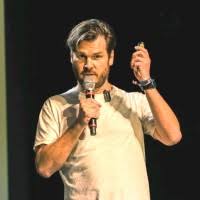
Learn More About Pele
0 Comments