
Colivers Club Ep 32: Building Community and Revitalizing Rural Areas Through Anceu Coliving with África and Agustín
Can coliving help bring life back to rural villages?
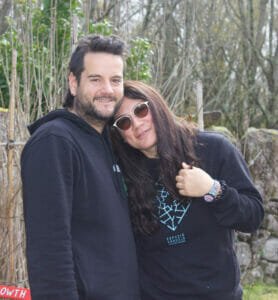
In this episode of Colivers Club, we meet África and Agustín, co-founders of a rural coliving space in Galicia, Spain, and the people behind Rural Hackers, an initiative using community, technology, and collaboration to revitalize rural areas.
They share how a coliving space can become much more than accommodation: a platform for bringing people together, creating meaningful projects, and encouraging people to put down roots in small villages.
We explore:
– Rural revitalization: How coliving can attract new people and breathe life into villages facing depopulation.
– Rural Hackers: Using technology and collaboration to solve real community challenges, including building an open-source platform for local water management.
– Corporate partnerships: How remote companies can contribute through funding, employee time, hackathons, and meaningful retreats.
– Building community: Why giving residents ownership, listening to their ideas, and letting them shape the space makes all the difference.
– Urban vs. rural coliving: How nature, fewer distractions, and a slower pace of life can create stronger connections.
– The business model: Combining coliving, coworking, residencies, and public funding to create a sustainable ecosystem.
We also hear the fascinating story behind the space, from its beginnings as a German ceramics retreat and restaurant to its new life as an international coliving community.
As África puts it, coliving is not necessarily about sharing a building. It’s about creating a network of people who take care of each other, contribute, and share values.
Can coliving become a tool for revitalizing rural communities? And what would it take to make more people choose village life over the city?
Read the Interview
África: Business, as you said, is a small place. I mean, with 100 people and also a lot of old people. So this means that in the near future, maybe it will disappear as a community per se.
Cesar (host): It’s very interesting to me how you manage to make people want to come here and even move here.
Agustín: It started as an initiative to bring people back to rural areas. We put together a group of 20 people with different backgrounds, and we built the prototype for our water community management. This is way better. I have time to listen to myself. I have time to actually think you are.
África: Happier when you’re surrounded by people that you share values with. Living in a rural area is not for everybody. But.
Cesar (host): Hello. Welcome, everybody to another episode of calibers. Clap. I’m the social worker. Today’s episode has been powered by Macmillan. Here today we are in and living in Galicia, Spain. And I am joined by. I also love free. Hello. How are you?
Agustín: Hi. Hello. Thanks for, for having us.
Cesar (host): Absolutely. Is a pleasure. Thanks for also letting me be here in this beautiful co-living. I’ve been here for a month and a half, I think. Already. And I’m leaving already soon. Hey, time flies by. Absolutely. Would you mind introducing yourselves to our audience?
África: Yeah, well, my name is Africa. I’m part of an eco living team and also part of Social Hackers, the NGO that we also founded after the comedian and also the founder of a space, coworking in Pontevedra. Close by here, half an hour from and through lies.
Agustín: And then I am co-founder of and the co-living and also co-founded overall Hackers.
Cesar (host): Oh wow. So many projects happening here in this really remote village is very interesting to me. How you manage to make people want to come here and even move here because people are starting to move to these villages that has, I don’t know, 100 habitants, maybe more or less. And yeah, it’s so many initiatives. And I actually came here for, Real Hackers initiative called Hacker Days. Let’s go step by step. And maybe they are free. Can you tell us about what is real hackers?
África: Well, since the beginning that we opened the colleague in five years ago, we saw this place as a platform where things could happen to help to the revitalization of the village. Because, as you said, it’s a small place. I mean, with a hundred people and also a lot of old people. So this means that in the near future, maybe it will disappear as a community per se. So when we moved to here, we decided we wanted to do something to avoid this situation and to make more people come to this place. The co-living, even though it was a private company. And so co-living, we began since the beginning to develop a small social impact projects so that we can, bring more people to the area through different kind of initiatives, like artistic projects or things like this. And at some point, we realized that, we should create an NGO, like two years after that, more or less. And its name is Rural Hackers. So basically, all the different initiatives that we do here in the village to promote the, the people to move developed through this NGO, which is also international. And also this is why we can, create a network internationally with other ideas to create projects here. And, yeah, make the people think about moving in.
Cesar (host): And the name is very, points. Right. It’s also the economic, like rural. Okay. Wait, what? Very interesting name on the brand. It’s, super nice because it’s like a tree, right. Which kind of like nodes. So it seems like very computer. And I really like the brand.
África: Well, in a way, you know, the hackers come from the combination of rural. Of course, we are in the middle of the forest, let’s say. And then the hacker culture related to the fact that it’s nice to try things, to see what happens when you do a smaller steps to keep on developing something and try to improve it all the time. But, also, it’s not just about the philosophy per se, but also technology, because, yeah, as I also will explain, these, techno lover, tech lover, let’s say. So technology is always really, in the, in the soul of the project, of all the initiatives that he can explain it more. So this is why is rural and hacking in both perspective, hacking the rural area, but also using technology?
Cesar (host): One of these initiatives from rural hackers is Hacker Day, which is a hackathon that happens every year. Right. And is hosted in, so co-living. And that’s also one of the reasons that, I came here as a software developer. Can you explain us more about this initiative hacker today?
Agustín: Yeah. Things that to the real hackers, there’s been like companies sponsoring us and helping us to design projects and how good this is. That’s when we thought, okay, it’d be nice to bring those people for those companies to spend a few days with us and see what the thing that we are doing, but we need to create space for it. A reason is not to just come here and and have you we can, for some holiday days or something. So it started to resonate with us. The fact of creating a hackathon with technology we could help fixing is a big word, but help, some real challenges. So we we had some meetings with people from the village. And in this case, the one that we did now in 2025, it was, for the what the association water community single is religious and management of water that is through the village itself is not through companies. That means that it’s very cheap. That also means that there is a board of members that they work a lot to actually keep these, these spaces very cheap. And they work a lot. So it’s like, okay, how can we introduce technology to help the processes that what’s being how could these version one that we did now in 2025. And yeah, we put together group of 20 people, different backgrounds and with different skills. We build a prototype for, for our water community management. So it was very nice. Brought people from different, companies also. And yeah, we are very happy with the result. Now, in the following weeks, I’m going to be meeting with, some the prototypes, the, the people are going to be using the, the version 0.1 that we’ve built to see everything that can be improved. And yet the idea is during the when we have this in production for the first communities, we are going to, release a program that actually people can help us to improve the code and they can get the residency at, so co-living during 2026.
Cesar (host): Oh, that’s very smart.
Agustín: So with that, we encourage people to actually help. And then, for the ones that help the most, they can keep on working on this project for a month in, in until 2026.
Cesar (host): Because also, given the fact that, public handling of waters, we want to keep it public, right? We don’t want to make it private. It’s also part of the essence of the project collaboration. And even the code is open source. It’s also the name of this punto de agua com. It’s incredible to me to think that in 20 people come here supported also by companies like yours or even all this like, next to that, that they support this initiative where we get together, we find a problem and try and help. Right? Yeah. This is a design process. We people, we’re talking to the project owners. And they’ve never been in this position. And. Yeah. Nina week building something like this. Wow. Quite challenging. But, it’s it’s super nice and interesting. And you can see the code, the, the building website, and we’ve in some papers and newspapers. Right now, I think. How has been the the impact of this, project in the community?
África: The first step, but we also have seen the impact not just in on sale, but also in other villages that they want to try. Also this prototype, in fact, we have already encountered with two of them at least that they are nearby because the system is used in one 1500 small villages in Galicia. But, last week we also discovered that it’s not just using Galicia, but also in Leon, another region close by. Galicia. So they will be also the possible users of this platform for us is really amazing, because this means that not just this about Galicia is not about just our village, but also other regions. And the most important part is, as I said before, here there is basically old people. So we need young people that they move here. But then if these young people move here or move, I mean, don’t like us, for example, then if we have to be in charge of the system. The problem is that, we are not quite sure if it’s going to be possible because it’s a lot of job. So the idea of how could is, is like, keep on improving this, system. So that when is the moment that we are the ones taking care of this system, we are going to be responsible and we are going to have the time to really make it happen, because now basically is done by a group of people that they are all retired people, they have more time, but when they are not here or when they are tired of it, it will be us and we are not now in the moment of retirement. So this means that maybe we are not using this system anymore, which we shouldn’t be doing that. So we are also seeing the impact in that aspect. That is not just about the moment of now, but the moment of the future when people that are moving here, they will be in charge of taking care of these. So it’s really important of Hacker Days that we are taking, a problem. A challenge, is not about, creating a prototype that maybe is used or not. The future of hacker is that it keeps on doing every year so that we really solve a problem. Maybe this water management problem, take us to hacker additions, or maybe three, but in three years, we will have a solution that the future of our community here will be able to really use it. Maintain the system, right?
Cesar (host): Because right now it’s very manual, and there’s a lot of knowledge that you need to have to kind of keep, doing the water readings, knowing where are the pipes that you need to fix. And yeah, they use notebooks, printable sheets, so all of that, but then they need to send it to some person so they get the concession again. Yeah. It’s just it’s crazy. And there’s no solution. There’s no solution. And it’s very endearing that you guys took the initiative to create this space for people to help. And I want to also, that’s based on something that is very interesting to me that companies find ways to collaborate with these initiatives. And for example, I was you are a software developer and you work for 11 jails, right now. I’m very supportive for these initiatives and for the college. I mean, can you tell us more about how your company or other companies can be helping co-leading San these rural initiatives.
Agustín: In our in the case of other co-living, $11 being always supportive right since the beginning of the project, for example, 11 year old was renting one of the rooms 12 months a year to bring people because it’s a remote company. So, we don’t have an office per se, and people from Milan could come to and calling for free. That was like, kind of the as they were starting the project, then the company wanted to help. Somehow the birds being evolving. And now we have Iraqis. So, there’s more like local impact driven breeds. Another co-living is working. So maybe that need is not going towards co-living per se, but, towards the, the NGO through the project. So they believe in what we are doing in terms of, creating a community, creating a space where actually people want to move because it’s not just the call even the living in Africa was saying before is there is infrastructure is the platform, but that brings other things. That’s like people moving people that they have never been here or people that they had some relation with the village. But now is there like so many things happening because of Iraqis, they are now taking this step and saying, okay, then I’m moving now to. And so because now things are happening more than in whatever they were living before. So that’s something that says it very clearly. And as people from the company love to come here, they want to invest that this is a long term project, you know, because it’s not good for anyone that in two years we are tired. And as the organization didn’t grow, we mean naturally we will leave the organization and then that’s that’s that. So we we need companies that actually believe in that. And us, we have 11 that are like other companies that for example hacker there is, there was temas, which is another software company from Galicia that they were helping us, financially, or Siga, which is hosting company also they, they brought here the country manager because they have been helping us for the last years. But they knew that we were doing stuff, but they didn’t really understand how or what. It was all and people are calling in video calls. So they came also to see, okay, what’s these things that these people are talking about it. And I was tell people like, you have to catch you have to see it because, yeah, we all can tell a story. But then when you come, you see, you meet Rosa, Olga, you meet Camilo. Which are they? Actually these old people that Africa was mentioning before. And you meet them and you talk to them. Is like, okay, these things are happening here, right? So sometimes for companies, it’s easy to say, yeah, we invested some money and we planted 100 trees. That’s because, you know, a lot of companies are KPI oriented. So it’s it’s it’s.
Cesar (host): You can be it’s the number of.
Agustín: Trees you can count the number of trees, but you can, you know, impact is very hard to measure. And that’s something that at least we see when we meet the people that actually has been impacted for. So that’s why we always encourage people in companies approach is like okay, come here first and see what we are doing and then you’ll you’ll understand it better. And that’s what happened. For example, with Team Us, they came here, they saw what we were doing is like okay, it’s a Galician initiative doing stuff here. That’s what of course the CEOs, we hear the details, we hear they are very involved. The city of the company actually was part of the hackathon and he was like super involved. So but for that, I always say that, dude, you have to be there on site because what we’re doing is also very small. You cannot be compared with big organizations that they work internationally with a lot of initiatives. We are very oriented on rural areas, on our region. So we started until we we say that we started being very unstable, centric, but now not. You bought a house ten minutes from here.
Cesar (host): And not to the other and you know.
Agustín: The memory of projects. So now we are doing initiatives. Not so. And we hope that this keeps on growing method that we need for staffing.
Cesar (host): And I think, companies nowadays, especially software development companies or a lot of companies actually, they have a challenge and it’s to keep the culture of the company without having an office or being very remote oriented, because people now they want to be able to have a better balance between work and your personal life. And having a remote job helps with that, or at least a hybrid kind of job. So having a place like, living where you can actually get team members, spend a week or a month in the co-living for a hackathon or just a regular stay, I think it’s very nice to build a culture and to to people really make this connection, because then they are going to feel more, part of the company. So I think that’s a big plus for companies, right?
Agustín: Because also because I think that, yeah, if you bring everyone from the same company here like a retreat, it’s going to work like.
Cesar (host): This, I feel very.
Agustín: Or. Yeah, or feel free of the members. But I think it’s very inspiring because that’s also one thing that I get the feedback from, like is very inspiring from people members come here and getting to meet other people, what other companies are doing is very inspiring. Or meeting people from other backgrounds and see other ways of of doing stuff. And that’s very good for the company also because the company gets new ideas from, from also people from, in the co-living.
África: Also, I would point out that in the case of Hacker Days that we also had people that they were, let’s say the company allowed them to work, for the project. That was the way the company was contributing, let’s say, with their people. They were one company on marketing because and the other one was work in a French company. So they gave them the allow them to work in the project for this for that week. And that was the way that the company was contributing within the project. And I found it super interesting because as I was saying, sometimes with remote companies and the remote workers are missing, is this lack of purpose like also to be part of something, you know, to belong to something for a while during during a period of time in the year instead of being at home or maybe in a co-working. So, how could this could be also that option for companies where there are people can come and contribute with their time. Not too specific.
Cesar (host): So meaningful project. Right? That is actually helping because through software developers, sometimes we get to work in very nice projects, make the world a better place. And sometimes we need to deal with, other projects like that. So. So, yeah, this is a way of escaping that, kind of system.
África: Giving these remote workers the option of being part of something that is important for them. Maybe imagine a worker that is, really involved in rural perspective and being part of hacker. This is an opportunity to be fired from the day to day reality. And I would say is a really nice perk as a company.
Cesar (host): Yeah. I also feel when I go to cold evenings and I’m working, I can compare it to when I was just working from my house or remote working from my house, which is not as nice as being in this setting. And I can see that whenever I talk to colleagues, my energy changes and I feel much more recharge, even though I might even work more because I feel more recharged. So it’s just the change of scenery. And let me see. Let me say that what scenery is this is just amazing. So yeah, I feel like there’s, a lot of potential collaborations between companies that want to invest in this kind of initiatives because the you get the employees, feeling more like they belong to the company, more the company does something good for the environment, for the rural areas. So I think it’s a win win, win win, win win, situation. I also want to talk about you’ve, made the call living very embedded with, the association with hackers. You think other co-living schools benefit from creating these kind of associations and have these initiatives, to bring people to the co-living? How has this work for you?
Agustín: I would like to say that the financial model of the co-living has, like different fit, even lets you know that the co-living like Oliver’s now they come, they pay, they stay, they pay for the state. We have the projects that are like we close the co-living for, 20 people one week, Erasmus plus, for example. And then we have the residences that sometimes are public paid and sometimes the private. They and I’m using those three different sources. It’s been working well for us to get the public funding. Usually it’s easier within the association because yeah, the, the some of the fundings, they don’t go to private companies. So it’s good in our it’s been working well for us. I don’t know if saying everyone should do that is because I’m not this kind of president that tells what should be done for us. It’s been working and I know other colleagues that is being working also that mixing the the system, not having just co-living or not having just bring it because also there are like spaces that don’t have co-living. These they are they are based in the works for them also. Also, we have to take into account that, we don’t leave out of the co-living. So it’s our financial stability doesn’t depend on the co-living itself. So we like to do stuff that inspires us. And having this mixed model also makes beautiful situations when we have people from projects, residents, for example, with colleges and they mix, they know each other, they inspire from each other. So, we find this, combination also very good for us as the as the managers and as the operators. It’s a bit egoistic. We are the ones who have to keep on opening the space, so.
Cesar (host): Yeah, you need to get some energy out of the colony, because if not, you will not continue the project. So I think it should be balance.
Agustín: You know, co-living started as a as an initiative to bring people back to rural areas. And for that we need to keep on being inspired. And we need to, have people that actually would like to move to the spaces. And for that with this combination is been working well for us.
África: Yeah. Oh, so we have seen that the fact that when the people contribute in the village for them is easier to decide to, to move to here, for example, Andre and Flor, they are a couple. They met each other in the co-living. She’s from Romania, he’s from Germany. And, Andrea, since she came here, she has been contributed in so many ways, like participating in and creating her own practice here within the villagers that, for her, it was the best way to really be in contact with the place, be in contact with the people creating this feeling of, yeah, I want to be part of this family. It’s not about the co-living, but it’s about all the things that are happening around. So this happens with the people. When the people are part of projects and sometimes is not receive, you are living with this remote job that maybe you are working ten hours a day and then, well, of course you can be part of the community during dinners, maybe in the weekends, but it’s a different way when you are part of a specific project within the village, right? That you get much more in love with what it means to be.
Cesar (host): You know? So we are talking a lot about rural areas and rural co-living to me, it’s quite interesting as well that whenever I go to college, things that are very community oriented, they happen to be quite remote or quite rural. And I’m wondering, is this kind of model school work, know community oriented co-living in a city? What do you think?
Agustín: I think you can work. I think it’s harder when you have a whole city to discover. It’s easy to use your time to go to the city here or in rural settings, or even they don’t have to be as real as some think about the places that it’s just it’s a town with few hundred thousand people. You don’t have a whole city to cover. You don’t have that many plants. So what I’ve seen and we’ve seen here, but also, you know, living in a rural or a urban areas, is that life goes towards the inside, goes towards doing stuff with the, with the rest of the community in the colony. So that creates like, yeah, usually stronger, stronger bonds, stronger relations. Those that can meet working cities. I suppose it can. I think it’s just hard because yeah, this like it’s easy that people go to the co-living not for the co-living, but because it’s in Madrid or in Berlin or in, in the big city. So it’s harder to these people dissipates the, energy towards using it on the city than on the co-living.
África: And then also, I would point out the power of nature in the aspect that sometimes we underestimate. But, I think it’s creating a lot to build this community. I mean, being surrounded by nature, suddenly you are not that focus on, do I want to go for a coffee outside? No, because just one time I saw that it’s just so beautiful that I don’t need to go far there because you have the forest. And just sitting here is just. Yeah, you don’t need to go far away to do something. You are just using the energy that brings to you all the nature and what it means to you and the good things that it’s doing to you. So I think, when you are in this kind of place surrounded by nature, you feel better. And maybe this is why it also is easier to connect and to be with people and to be with community. When the plan is going to do, yeah. Hike. The nature is doing its magic, believe it or not, but it’s doing it. So how the people connect in that aspect, how the people create the community with the nature involved is much more powerful than in the city.
Agustín: For example, if we would have like, coffee place, just the co-living, I guess, like there would be a percentage of people staying here that they would go for a coffee in the morning to the cafe, which is legit. I wouldn’t send it as we don’t have people. We have our own cafe area and people meet there every morning, chit chat a bit. Sometimes they sit and talk for 30 minutes. That creates community. So the fact of not having choices out of the co-living to consume, because it’s something that is very embedded in our lives now because we that’s how the society is treating us. Like you have to go, you have to spend, you have to go to a cafe, you have to buy clothes, you have to do things spending related out of your house. But when you don’t have the choice, you do focus on the people you see. You talk, you listen right. And that creates community. You get to know the people a bit more. So that’s why what I said before, like, I think it’s hard, it can happen. But I think some.
Cesar (host): Yeah, I think having a limited set of options makes people really have to plan around activities. And then, oh, I’m going to this place. Who is going to come with me? I have a car. So yeah, I think that’s a way of building community. As you said, I want to talk about ROI a lot. Since you have experience creating co-working spaces, what makes a co-working space go from good to great?
África: Well, I open space, a ten years ago, 2013. I would say one of the key points is to make this people understand that the co-working is their home, and that means not saying no. So many times as a manager, let’s say, and when the people comes on purpose. Hey, what about this? What if we do this? What if we do the other la la la la la to say yes in general, maybe something that you’re not going to join, but it’s just the.
Cesar (host): Activities that they people and propose.
África: Activities. It can be changes in the plays. It can be adaptations in whatever. I don’t know the decoration or the way we do this thing or how do we organize the Christmas party or the next activity that maybe can happen. Or this kind of can be everything, every proposal that can happen in a place. I think that makes the people feel at home. And then the people see, okay, what I propose is just there. So I’m part of it. So I’m going to take care of what it means. My home, my second home. And, I think it’s something that we also try to way of doing in the co-living. Right. So that the people when they come, they see that their perspective has been heard and has been listened. And yeah, I think that is a great way of building community. So letting the people do, trying to be flexible, sometimes we are just inflexible. And that means if people doesn’t want to join the place where they feel like, okay, this is like the military service, okay? So I want to be there. So I always say that you have to be better in that in your home. And when it makes it, people feel nice is when they feel that they are.
Cesar (host): Hurting the.
África: Hurt. And also in a place of freedom. Yeah.
Cesar (host): I also feel like these people give feedback on their condition to know that they feel part of the and the space and the project. Yeah. Because your approach towards the co-working is, not only a co-working. So it’s not only a physical space where you have a monitor and all this kind of chair. Hopefully you have chairs, right? Yes. Okay. Yes. They have chairs. Guys. It’s also creating activities are on the co-working. So,
África: Yes, in my case it has been an evolution is through my, my co-working space since we began in 2013. We began to develop a lot of different projects, helping also, not just our coworkers, but also bringing people to develop their own projects, entrepreneurs, but also people who are looking for new job opportunities. So we developed different kind of projects inside of the of the co-working per se. So as I said before, I think that, creative space, like a hobby, can be a platform for so many things. But also, as I said before, it has to be related to things that you as a manager are in love with them. If not, you are going to be fed up of them and then you are going to close. So it’s true that the micro working has been an evolution. I’ve been living before, much more in the city. Now I’m more in here. So what I try is to build bridges in between the two communities. So the way that I contribute now within the co-working is making the people part. Also of this. They can use this core in this place, then living also for free as a co-working and the other way around the people in my in here, they can come also to the co-working and they can work from there for free. So to build this, yeah, this bridge in between the two communities, we have, for example, a coworker that she usually develop her, workshops here, related to Saint Angela meditation. And she loves this environment. So she come here for free, and she does also her activities here. So it’s like how to build bridges in between the two communities so that here there is a lot of international people that inspire my more local community. And the other way around, when the people of my coworking comes here, they contribute in the process in several ways, from being translators, to be an artist that contributes. One of the rooms has been made by one of my coworkers, for example. So different ways so that we can bridge, we can create this, this bridge because it’s something that I’m also interested in. And this means that I have to be passionate about, even if my coworking is still there in an urban area. How can we, establish new bonds in between the two communities?
Cesar (host): Yeah, absolutely. I think also, I lost track of my. Okay, well, sometimes it happens. I will come back to me. If it was not important, it was not that important on this. Oh. The kitchen. I live there because the fire is still. I wanted to ask you about the history of the co-living, because I’ve heard what was the space before. And to me, it was like, what? So I want to share that with the with the audience. How? And say you came to me because it’s, quite a big house with other houses nearby. Yeah. Tell us about the story.
Agustín: Yeah, the story is amazing. I think it’s, beautiful story because, yeah, everything started in 1981 with a German lady called Angela. She ended up here with a map. Like a physical map. You know, there was no Google Maps in 1981. So she ended up here because she was looking for a place where the road ended to start her own project. And this is actually where the co-living is, is, is where the road finishes.
Cesar (host): And there’s not possible to make even more roads. We are in the forest like this is the forest. It’s just so big.
Agustín: That at the time, there was not even asphalt to come here. So this whole part, this part of the village of until I was about the whole of the houses that you see there, they didn’t exist. There were just ruins here, the co-living. What is our house today? The other three neighbors that we have here all ruins. And then yet she came. She bought, several properties and she rebuilt what’s what is our house today? And then, she had, a workshop. So she was bringing people from Germany to learn how to do pottery. And so she was a ceramic teacher, so she would bring in groups of around 15 people to stay here for a couple of weeks learning ceramics from Germany in the 90s. So at the time, people were staying in the in Montclair, which is a nearby town that we have. So it’s like ten minutes from here. And then she’s not like, okay, I need a place for people to stay. So she built what, seven of the rooms of the co-living. So she built that. They had a kitchenette at the time, and then she also built what the chill house is today. And that was like a place where she would do, like, the meetups and.
Cesar (host): And the pottery classes were there.
Agustín: The pottery classes were in the in the ateliers in our house.
Cesar (host): Oh, okay. Because your house is quite close to the college, like two minutes walk.
Agustín: It’s. Yeah. So yeah, she started with that business kept on growing. So she rebuilt other two, buildings in one. She did the library. Those are like a library movie. But the place was a library of 1500 books in German. And then she built this huge kitchen because she was like, you know, even the people have their own kitchen in the room. They were asking me for more stuff, like, can you cook breakfast? Can you cook lunch? And so on. So she built this big, kitchen. She ended up doing a German restaurant. Oh, wow. So there was a German restaurant here in early 2000s in the middle of nowhere.
África: Elysium was really famous.
Agustín: It was famous. It was full of people.
Cesar (host): But it was the. Oh, because. Okay, so the kitchen and the cafe cafes.
Agustín: Right. And the chill house, where the salon. And so it.
Cesar (host): Was divided in multiple spaces. Oh that’s cool.
Agustín: And she was doing that in the 20s. She was combining that the restaurant with the still the groups of the she would call them the groups of Germans, not Germans. They would still come here. They learned ceramics. They stayed in the co-living. She could cook and everything for them. She told me that those people were asking her for more, touristic stuff. So she started to. Okay, let’s go and visit Santiago. Let’s go and visit whatever. She had another place like this in Leo, which is, another region like three, four hours from here. So they would stay a few days here, then they would go a few days to Leo and so on until 2015. She retired. She wanted to sell the place. The thing is that the the market liquidity of this place is very low because you can just have it for a business because you have like 11 rooms with bathroom is not something that is not a big house that you can with your family because the whole setup is, is, hotel setup. So, yeah, she was for five, five years. So the place until I appeared, I explained her what I wanted to do here. She didn’t really understand, but.
Cesar (host): She’s German or she speaks English, right? Yeah. Okay. Okay.
Agustín: Yeah, but even in Spanish here.
Cesar (host): So.
Agustín: Yeah, it’s 40 years here. Yeah. But then yeah she understood. And she was like, yeah, this is kind of the version 2.0 of what I did at the time. She did it with people learning ceramics and then and the living is for people working on the remote works, remote jobs. So there. Yeah, we we reached an agreement, and that’s that. She’s being living in front of the colleague because she still has a house there. Until recently, like a few months ago, she moved to open Carlos. But yeah, she still comes in weekends and so on. Yeah, we have a good relation with her. She’s super happy when I talk with, like, so happy that you brought back into life this project because. Yeah, for the five years that she was trying to sell the place she was renting to other people, and she wasn’t very happy on what was going on here. So, yeah, I think it was the windows situation.
Cesar (host): A win win win win win win. Yeah.
África: So it’s funny because the first anniversary of Michael working, we celebrated it here when it was still the German restaurant. Oh ten years ago. Yeah, yeah 2013. That year we did here like a big celebration and each of us was wearing a hat and we did kind of like these. Yeah.
Cesar (host): Like style.
África: Yeah, yeah. So it was fun. Ten years later.
Cesar (host): Yeah. It’s this very interesting way of things going back in a circle. Right. Of course. And say, yeah, which is part of, Colleen. And she helps, you know, with, different tasks because this is a big place and it’s a little bit of, maintenance, right from people helping. And so I think she told us that she actually came here with a group of friends, like, 20 or 30 years ago. And now now she’s living here as well, and she tends to the sheeps, dogs. Because, yeah, the ships like.
Agustín: The ships sometimes they like ship around here.
Cesar (host): Yeah, yeah. It’s just it’s just, lovely gardeners. They got it. Yeah, yeah.
África: Yes.
Cesar (host): I think there’s also some challenges being entrepreneur in, rural setting. What are some things people do? You see that they have resistance to maybe, trying new things or when to following these new initiatives that you’re creating or you feel like everyone is kind of on board.
África: Well, I would say living in a rural area is not for everybody. And there is a lot of people that they come and they think, oh, yes, this is this is, you know, this is the way I want to live this way, this is the way. And then at a certain point, they realize that maybe it’s not or maybe it’s not the moment. Obviously, our main challenge is, to make that people decide to move here. They need their time. And it’s not maybe the first visit when they when they decide to move, then they keep on coming the next year for another month, and then they next year for maybe another month. And then it’s when they move. So of course, I feel like that this will happen much faster now. So the challenge is obviously to make the people understand that this is a way of living and that maybe is that way of living that they are looking for. But sometimes, you know, as we were talking before all this, yeah, spring is in our life. Maybe as, normal. They have to be traveling. Here they are, here they are. I’m losing something, for sure. I’m losing something. And after yet traveling a couple of years, they realize that, yeah, what they are looking for is maybe come to see the nature. And the community.
Cesar (host): Is low by formal oriented. Yes. Like you need to. I saw this story on Instagram. I need $200 here and there’s.
África: So I would love that. Sometimes when a lot of people come with this, great energy that this is my place, that the energy wouldn’t go down, you know, like, because it happens. And then. Yeah, they need a couple of years to understand that this is the place. And then when they decide to move. So you always need to have your own energy as a team, a small team. Things to not to egos. Noelia now also on Sentosa. So, not to lose that energy because, you always need the fire. That is all the time. So that then the others can join.
Agustín: Also regarding what you ask, like, okay, are people reluctant to join what we do? We do have a lot of people that join because if you if you think about numbers, we are talking about the villas that 100 people live and then we do whatever even that we do, 20 people come that some people could think, 20 people is not a lot, but it’s 20% of the population. Yeah. And think about 20% of the people of Berlin going to something. Right. So in terms of numbers is very good because yet having, always a 20, 25, 30, I mean, we have like events like we painted, one mural in 150 people came. It was all and zero plus people in the surrounding villages. Right. So that’s, it’s pretty crazy. So regarding that, we are super happy about it. Also, we like to organize stuff that we want to be doing. So imagine, for example, if I would hate busking, making even if I we know that 100 people would come to the basket. Making classes will probably not organize that because we don’t like it. So as we don’t know how many people are going to come, maybe sometimes five people come in, that’s okay because we want to do what we are organizing. It’s not about the numbers. So even numbers are good. We are not oriented by them because then it’s you may jump into this kind of life like, oh no.
Cesar (host): I need to do this now.
Agustín: It has to be bigger. We need 35 people next time. And if not, it’s, when there’s something wrong, it’s a disgrace that just 15 people came this time. No, it is not because we want to do. For example, we we organize this event called for every couple of months, more or less. We have like things of technology, 3D printer. We have like laminate vinyl cutting where like braces, plastics, stuff. And then we also have like tambourine classes or basket making or something else like that.
Cesar (host): So why do you hate buskers making right I.
Agustín: Don’t oh good. I you.
Cesar (host): Could okay.
Agustín: And then our vests making we are recycling genes and we invest with them. So this attracts people who want to do it because for example now I’m very obsessed with the British plastics to learn how to recycle plastic. So and as we are doing too many things, we have our own jobs and so on. That’s the space that we gave us. Okay, we’re going to spend three hours on this that we like if people comes is good and even if people don’t come, that’s fine. Also, because I wanted to spend a couple of hours of three hours doing that. So that’s something that very moves us to do, keep on doing, stuff that we are interested. Yeah.
África: And also, it’s true that now we are we don’t live in the city. We don’t want to live in a city that we don’t want to be surrounded by a hundred people doing stuff. No, we want to be in a smaller size, like we’re with the people that, yeah, they cool people. The cool.
Cesar (host): Cool, cool, cool.
África: Cool. They want to be doing things like, yeah, in this more slow mode, if you than are organizing big things, big events or whatever, you are not going to be living in, relaxed way. So for that, these are the cities, not us.
Agustín: Absolutely. Because one of the things that city provides is convenience, right? Like you have your cafe in front of your house, you have the supermarket two minutes walk in and then but then just as everything is convenient, your life should be easier and slower. But then you would see this thing is the other way around. Like everything is super close to them, but they are always running right. That’s one of the things that you have to learn when you go to a rural setting. You can, go to the supermarket, two minutes walk. You have to plan you is less convenient, but you have in you have to plan. But then you realize that with that planning and so on, you can have a slower and less stressed, life. And that’s something that we’ve seen a lot that sometimes here to the co-living camp, people straight from urban settings and they have the high energy and they’re like, they just want to do a thousand things in one day and then that that lasts for a few days. And then they understand that here the setting is different than they. They slow the pace and then they come to us like, wow, this is way better. I have time to listen to myself. I have time to actually think. Because when you are in a city, usually do not have time for that because there’s like so many stimuli. Exactly all the time in lights and by here and go there, then.
África: Much more demanding. I remember one person that, she told us, like, you know, what should be a solution for to bring public transport here is like, come on, public transport here.
Cesar (host): And the subway. Right.
África: And he was like, you know, but this is this is the thing like the option of having it even though you’re not using it. Yeah. That’s the thing that is once you get in cities and here you have the basics you need, this is what you need. Do you really need to have the option of maybe taking the bus? Maybe if you maybe want to go to the city once, maybe one week is like.
Cesar (host): Yeah, I was I think you crafted around these limitations tools for example, to buy groceries, you have an Excel word. You can register everything that you want to to buy. Right. And it gets sent here every Wednesday now. So yeah, you don’t really need to do anything. And I think it also, you have more intentionality in your life because you have to be set an intention to do something, not just do it automatically. Because I think in cities you are like in an automatic mode and then sometimes, oh, what am I doing?
Agustín: I why am I?
Cesar (host): Why am I doing this.
Agustín: Like yeah, yeah, yeah that’s something that yeah we are, we are super happy about about it about creating also this community the towards the co-living the this is stuff happening and you can join or not. It is more intentional as you mentioned I really I really like how you how you put it in also towards the village because now us we are having more and more people moving to the village. We have another Oliver, which is like itinerary bookshop or we have Victor that he does training in boxing or fitness or this kind of stuff. We have, Andrea. Dan, she is a yoga teacher. We have Carlos, that is a tattoo artist. So there’s like, stuff happening here towards the village that people from the co-living love. And I understand why. Because when you remove all this, no intentional stuff that you do, you see this and you just have the basics, which is probably the place to work, a kitchen to cook and food and people to talk to. 90% of your needs are covered already. So yeah, that’s something super beautiful to see when, yeah, we I was mentioning before with the energy, then it goes down and then they, they start to value more other stuff. And yeah I don’t know I find it I find it amusing.
Cesar (host): I want to ask you both first we can start with our free. What does co-living mean to you.
África: For me co-living is a way of understanding life. I mean, you don’t need a co-living to live in co-living mode. You can live in a village. Different houses around, all of them close by, creating a, network of people that they can, take care of each other, contribute, being active, get this energy. That’s when somebody says no, the other one is, higher. So they contribute each other in creating this ecosystem of, care and love and. Yeah. And happiness. You are happier when you’re surrounded by people that you share values with.
Agustín: Yeah. From for me, co-living is community. And it sounds a bit like hippie hippie kind of way of explaining. And it’s something very intangible. But yeah, it’s Yeah. I think I can describe very well this, this network of people that take care of each other. And that’s something that you see more when you are coding with them, when you are staying at the same place. I guess that, if people have been studying abroad and they have to share an apartment, that’s something that is also to, to to happen that those people are people that I’ve been living with in the past. They’re important people in my life. Because when you are spending so many hours together, you get to talk about deeper stuff and sharing other things and not, a very shallow kind of, topics. Right. So how I see for me, co-living is community inspiration. That’s why like, the same for me is that we never stop getting inspired by people passing by here. We are very lucky because we are the operators of we get a lot of people passing by here and and that inspires even more that it’s always like, oh, this is amazing. We should try this other thing. We have to invite this friend off because.
Cesar (host): Kidnap them if there are too many.
Agustín: Always, not always works. That always works. So yeah, now I would describe like this like inspiration community.
Cesar (host): And who would you nominate next? Who we interviewed in the podcast. Would you like to see this story? Hear them?
África: Well, I don’t know if you interviewed already. Send it.
Cesar (host): You know.
Agustín: Then it’s a no brainer. Is the first one.
África: Person the pioneering.
Cesar (host): Okay.
África: Okay. Lovely. So that, created also the magic.
Agustín: Yeah they are I, I, I don’t get bored of mentioning this, but without saying there wouldn’t be until I know what co-living was because of the. I know the concept. I haven’t seen that, but I know the concept. I know how powerful co-living as, concept is because with 11 old the first three years of the company, we were living in different countries all together. And I always say that without that, the company would have gone bankrupt eventually. And yeah, all the the relation we have between us, these first eight people, the starting company, that’s something that is super strong. And that happened because we were living together. We were like traveling together. We were like hanging out together, cooking together. And that’s something that you live in a co-living. So that’s why that’s how until we start, it’s like, okay, all these life experiences with Sn11 Yellow Blast because of sending in this concept existed. And you’re like, okay, now more and more people will be remote working in the next ten, 20 years. That was before Covid. They already thought that that was going to happen. That’s like when people start to, to, to, to, to, to to live the remote working life. Usually you don’t want to come back. So I think they have to be the next ones of course.
Cesar (host): Well thank you very much, both of you. For this has been another episode of Gullivers Clap Footwear by Matt Millen. See you sometime soon, right.
África: Thank you. Thank you so.
Cesar (host): Much. Thank you. My bye.
Learn More About Anceu
0 Comments